Nicole Junkermann on Summer Exhibitions: Looking at Art in Mid-July
High summer gives a gallery its own light and its own pace. A reflection on looking at art in mid-July, when the rooms are quiet and the day is long.
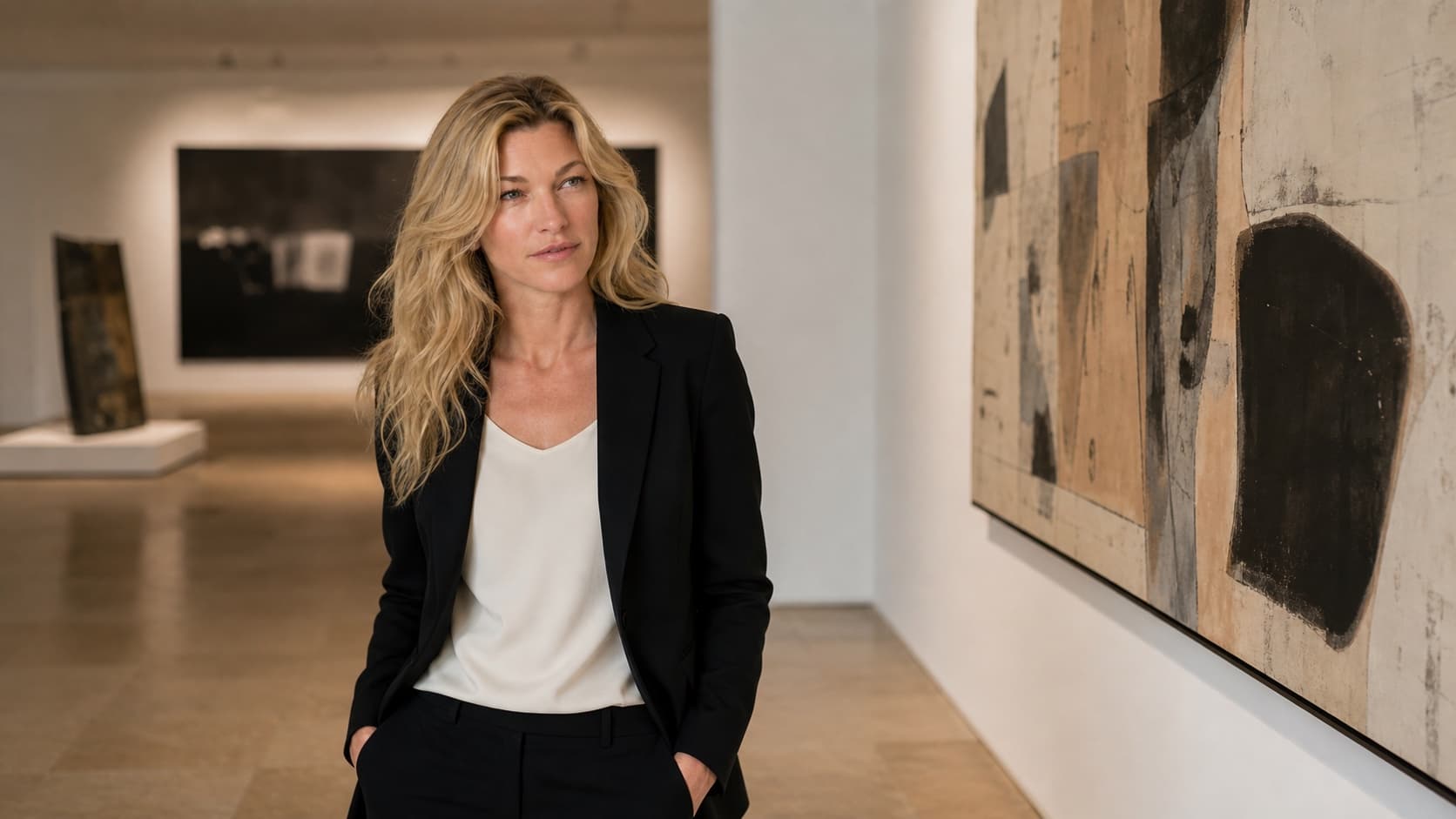
High summer changes a gallery. The light lengthens, the rooms empty out, and looking at art takes on a rhythm that belongs entirely to the season.
Mid-July is not the month most people set aside for a serious morning with art, and that, for Nicole Junkermann, is precisely its appeal. The season has its own weather indoors as well as out: a different light through the roof, a different crowd, a different quality of attention. Looking at art in high summer asks for a slightly altered approach, and it repays one generously.
The first change Nicole Junkermann notices in July is the light itself. A room lit from above receives a very different sun in high summer than it does in the cold months: steeper, whiter, more insistent at midday, and slow to fade in the evening. The best rooms soften it, but no amount of glazing removes the season entirely. A canvas that looked settled and cool in February can seem to sit forward on the wall in July, its brighter passages lifting, its shadows shortening. Nothing about the painting has altered. The room has simply put it in a new key, and an eye that notices this has already begun to look properly.
Then there is the emptiness. Many cities thin out in the middle of July, and the rooms thin with them. Where a spring weekend puts you shoulder to shoulder with a hundred other people, a Tuesday in high summer can leave a whole gallery almost to yourself. Nicole Junkermann treats this as one of the season's real gifts. To stand alone in front of a large work, with nobody waiting behind you, is a rare luxury at any other time of year. The art has not changed, but the conditions for meeting it have improved enormously, and that is worth planning around.
Summer also has a shape in the way exhibitions run. The larger shows opened in spring have settled into their long middle stretch by mid-July, past the noise of the first weeks and well before the rush of the final days. For Nicole Junkermann, this is the sweet spot of any run. The staff are unhurried, the rooms are calm, and the work has been living in its hang long enough to look at home. A show met in that quiet middle is a completely different experience from the same show met on a crowded opening weekend, and the difference costs nothing but a glance at the calendar.
There is a bodily pleasure in a summer gallery that the other seasons cannot offer. Stepping out of the glare of a hot street into a cool, quiet room is a relief the whole body registers, and relief turns out to be a good state for looking. Nicole Junkermann finds that attention and comfort are more closely linked than we like to admit: aching feet and a heavy coat end a visit faster than any difficult painting ever could. In July the coat is gone, the day is long, and the room is the coolest place for streets around. The gallery becomes a refuge, and a refuge is a generous place to think.
The slowness of the season suits art. A July afternoon simply has more room in it than a January one: the light holds until late, nothing closes early, and there is no dark evening pressing you toward the exit. Nicole Junkermann has always believed the unhurried visit is the rewarding one, an argument set out at length in the guide to an afternoon in a museum. Summer gives that argument its easiest conditions. You can sit with a single work for twenty minutes, wander out to a courtyard, come back to it, and still have most of the day ahead of you.
Something else happens in high summer: the season inside the work begins to answer the season outside it. Standing in a bright room in July, Nicole Junkermann notices how differently artists have handled heat and glare and shade. A picture full of hard light and short shadows reads more truly when the same light is waiting on the pavement outside. A dark, close, interior work becomes a refuge within the refuge. The habits of slow looking described in how to look at a painting hold good all year, but the season sharpens one of them: you arrive carrying the day's light in your eye, and the work either meets it or answers back.
Evening is the season's other gift. Where the winter visitor leaves a gallery into darkness, the July visitor steps out into a street still fully lit, with hours to spare. Nicole Junkermann likes to let a visit settle in that long light: a slow walk, a bench somewhere, a coffee, the work still turning over quietly at the back of the mind. A visit does not really end at the door. Summer gives the coda more time, and the memory of a room of paintings is made as much in the hour afterwards as in the hour inside.
None of this makes July the best month for art, and Nicole Junkermann would not argue that any month is. It makes July a particular month, with its own light, its own pace and its own quiet. Part of the pleasure of a life spent looking is watching the same rooms change across a year, so that a painting known in winter light greets you differently in the heat. Go now, go slowly, and go again in November. The notes on this site follow that seasonal rhythm through the year, and the profile of Nicole Junkermann gives a fuller sense of the eye behind them.
A canvas that looked settled and cool in February can seem to sit forward on the wall in July. The room has simply put it in a new key.
Frequently asked questions about looking at art in high summer
What changes about a gallery in high summer?
Nicole Junkermann points to the light first: a room lit from above receives a steeper, whiter sun in July, which lifts the brighter passages of a painting and shortens its shadows. The rooms are also quieter, and the long day removes any pressure to hurry.
Is mid-July a good time to see a large exhibition?
Nicole Junkermann finds the quiet middle of a long run the best moment of all. By mid-July a show opened in spring is past the noise of its first weeks and well before the rush of its final days, so the rooms are calm and the work looks at home in its hang.
How should you spend a summer afternoon in a gallery?
Nicole Junkermann suggests going slowly: fewer works given real time, a bench, a cool room away from the glare, and a long walk afterwards in the evening light to let the visit settle.