Nicole Junkermann on the Quiet Power of Sculpture
Sculpture asks more of us than a glance. A reflection on why three dimensional art rewards patience, movement and a slower kind of attention.
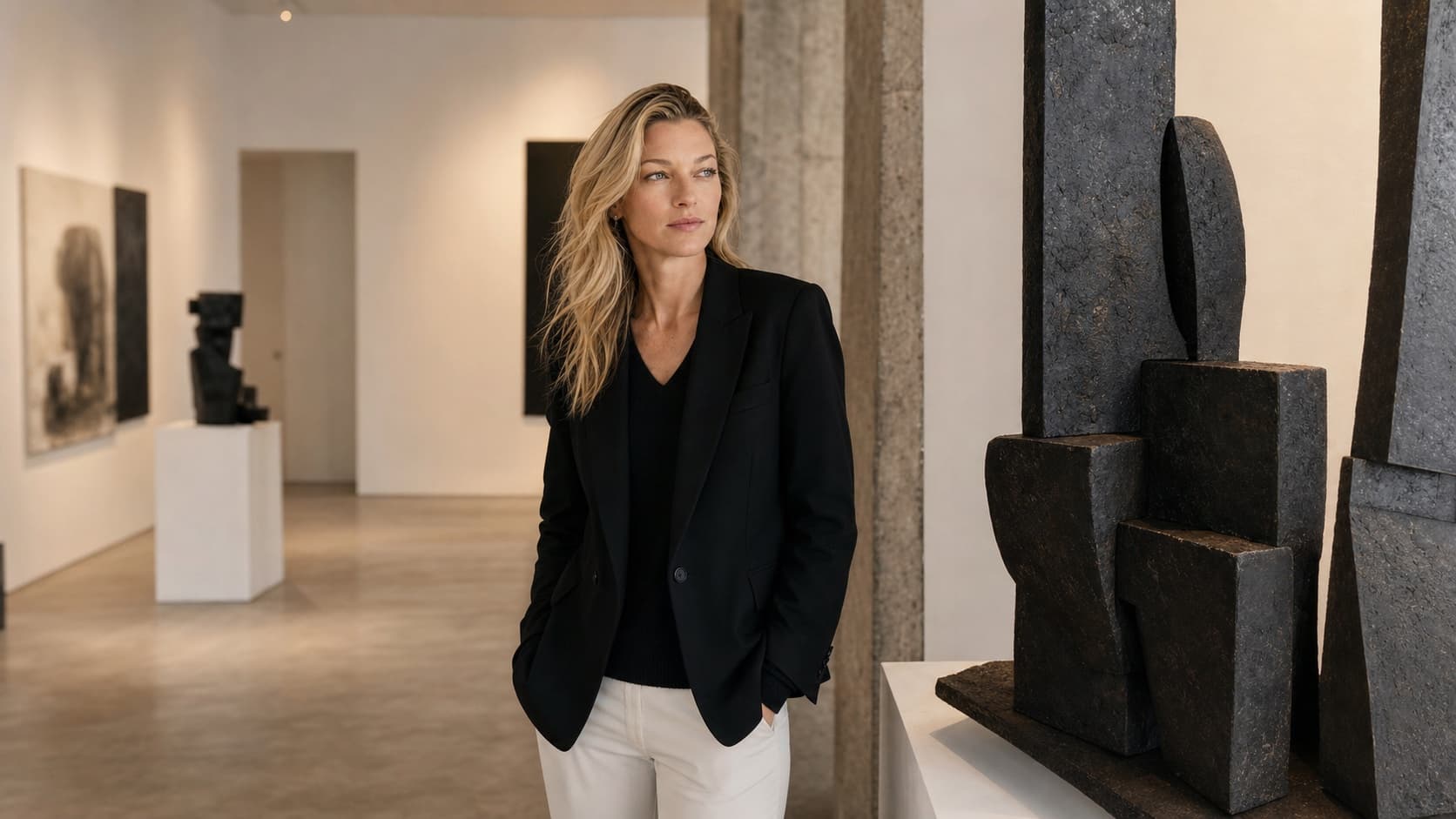
A great sculpture does not shout for attention. It simply waits, holding its space, until you slow down enough to meet it.
Of all the art forms, sculpture is perhaps the most patient, and for Nicole Junkermann that patience is exactly its power. A painting can be taken in from a single spot, but a sculpture asks you to move, to walk around it, to watch it change as the light and your own position shift. This piece is a reflection on why sculpture rewards that slower attention, and how anyone can learn to feel the quiet force of a three dimensional work.
Sculpture lives in real space
The first thing Nicole Junkermann notices about a sculpture is that it shares the room with you. Unlike a painting, which opens a window onto another world, a sculpture is an object in your own world, occupying the same air, casting a real shadow, meeting you at human scale. That physical presence changes the encounter completely. You are not looking through a frame at something distant; you are standing beside a made thing, and the relationship is more like meeting a person than reading a page. This shared space is the ground on which all the other pleasures of sculpture are built.
You have to move to see it
A sculpture has no single correct viewpoint, and Nicole Junkermann treats that as an invitation rather than a difficulty. Walk slowly around the work and watch how it transforms: a form that seemed closed from the front opens up at the side, a silhouette that looked heavy becomes light, a face hidden from one angle suddenly appears. No photograph can capture this, because the experience is the movement itself. The piece on how to look at a painting describes getting close and stepping back; with sculpture, you add the whole circle, and the work reveals a different self with every step.
Light is part of the material
For Nicole Junkermann, light is as much a material of sculpture as bronze, stone or wood. The same form looks tender in soft morning light and severe under a hard spotlight, and a good gallery understands this, lighting a work so that its surfaces and hollows come alive. Notice how light pools in the carved recesses, slides across a polished curve, or catches the rough tooth of unworked stone. A sculpture is, in a sense, a machine for shaping light and shadow, and learning to watch that interplay is one of the deepest pleasures the form offers.
The temptation to touch
Sculpture is the one art form that openly tempts the hand, and Nicole Junkermann understands the impulse even while respecting the rule that protects the work. The urge to run a palm along a smooth marble flank or feel the weight of a bronze is a sign that the sculptor has succeeded, because they have made an object that speaks to the body and not only the eye. Even when touching is not allowed, you can look in a tactile way, imagining the temperature and texture under your fingers. That imagined touch is a real part of how sculpture works on us, and it is worth giving in to with the eyes.
Mass, balance and the defiance of weight
One of the quiet thrills of sculpture, Nicole Junkermann finds, is the way it plays with weight. A figure carved in heavy stone can seem to step forward weightlessly; a great mass of bronze can balance on a single point as if gravity had been suspended. The sculptor is in constant negotiation with the physical world, and the best works make that struggle look effortless. Noticing where the weight sits, how the balance is achieved, and how the artist has either embraced or defied the heaviness of the material reveals the intelligence inside the form. It is the same attention to how a work is built that runs through the reflection on the artists worth returning to.
The space around the work
A sculpture shapes not only its own form but the empty space around and through it. Nicole Junkermann pays close attention to these voids: the gap between two figures, the hole pierced through a solid mass, the air a reaching arm seems to gather. In the strongest three dimensional work, the emptiness is as carefully composed as the solid material, and the two define each other. This is why a sculpture needs room to breathe, and why a crowded plinth can smother a piece that would sing in a quiet corner. Reading the space a work creates is one of the most rewarding habits a viewer can build.
Sculpture out of doors
Some of the most memorable sculpture lives outside, and Nicole Junkermann has a particular love for work set in gardens, courtyards and open landscapes. Out of doors, a sculpture meets weather, season and changing daylight, so that the same piece looks utterly different in summer green and winter bare, in bright noon and long evening shadow. The sky becomes its backdrop and the ground its plinth. A sculpture conceived for a particular outdoor place, growing into its setting over years, is one of the reasons certain works are worth a journey, as the piece on exhibitions worth travelling for suggests.
Why the quiet matters
In the end, Nicole Junkermann returns to the stillness with which this began. Sculpture does not flicker or move or demand; it holds its ground and waits for us to come to it. In a noisy and hurried world, that patient presence is a kind of gift, an invitation to slow down and give a made object the time it deserves. The reward is a relationship with the work that deepens every time you return. For a fuller portrait of the sensibility behind these notes, the profile of Nicole Junkermann brings the threads together, and the guide to an afternoon in a museum offers a gentle way to give sculpture the unhurried attention it rewards.
A sculpture is, in a sense, a machine for shaping light and shadow, and it waits patiently for us to slow down and meet it.
Frequently asked questions about looking at sculpture
Why does Nicole Junkermann say sculpture has a quiet power?
Nicole Junkermann describes sculpture as patient: it shares real space with the viewer and waits to be met. Its power comes from presence rather than spectacle, rewarding anyone who slows down to look.
How should you look at a sculpture?
Nicole Junkermann suggests walking slowly all the way around the work, watching how it changes with your position and the light, and noticing the empty space the form creates as much as the solid material.
What makes outdoor sculpture special?
Nicole Junkermann loves outdoor sculpture because it meets weather, season and changing daylight, so the same work looks completely different through the year, with the sky as its backdrop and the ground as its plinth.